
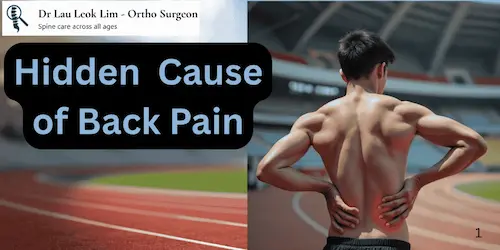
Whether you're a concerned parent, a young athlete, or a clinician seeking clarity, this guide covers everything you need to know — from symptoms and imaging to treatment options and recovery expectations.
What Is an Apophyseal Ring Fracture?
- Fracture of the vertebral body rim at the ring apophysis
- Most common at L4–L5 and L5–S1
- Typically affects adolescent males engaged in sports
- Often associated with lumbar disc herniation
Why It Happens
- The ring apophysis is a secondary ossification centre that fuses around age 18–25
- Before fusion, the junction is cartilaginous and biomechanically vulnerable
- Common injury mechanisms include:
- Acute trauma (sports injury, fall)
- Repetitive microtrauma
- Sudden axial loading or hyperflexion
Clinical Presentation
- Localized lower back pain after activity or trauma
- Radicular symptoms: leg pain, tingling, or weakness
- Positive straight leg raise test
- May mimic or coexist with disc herniation
Diagnostic Imaging
- X-ray: Often normal or inconclusive
- CT scan: Best for visualising bony fragments and rim defects
- MRI: Ideal for assessing disc pathology and nerve compression
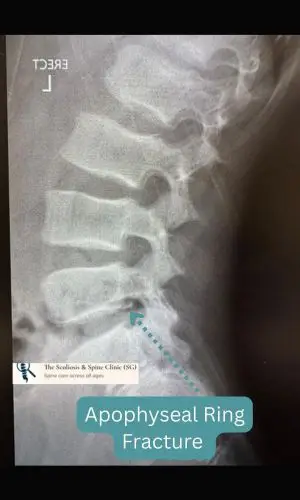
Lateral lumbar spine X-ray showing posterior apophyseal ring fracture at L5.
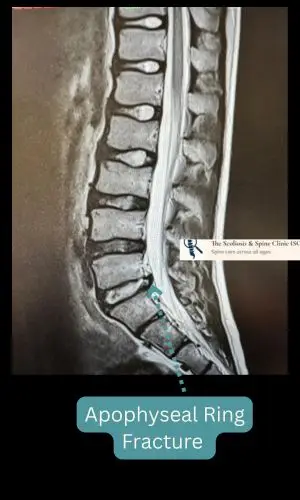
Sagittal T2-weighted MRI confirming fracture with no evidence of nerve root compression.
Treatment Options
- Conservative: Rest, NSAIDs, physiotherapy, activity modification
- Surgical: If symptoms persist or fragment compresses nerve root
- Posterior discectomy
- Removal of apophyseal fragment
- Minimally invasive techniques preferred
Case Insight
He stood on the turf — lean, focused — the afternoon sun casting long shadows. At thirteen, his frame was still growing, but his stance already spoke of discipline.
Then it happened. A sharp twist, a sudden jolt, and pain shot through his lower back. He froze mid‑motion, one hand reaching instinctively for the source of pain.
At home, the pain worsened. Tingling crept down his leg, sitting became unbearable, and sleep was disrupted. MRI revealed a posterior apophyseal ring fracture with disc herniation — the cause of his symptoms.
Months of structured rehabilitation followed. Strength returned, confidence grew, and eventually he stepped back onto the field — not just recovered, but resilient.
Final Thoughts
Apophyseal ring fractures are often overlooked but can cause significant morbidity if left untreated. Awareness, appropriate imaging, and timely intervention are essential — especially in young, active patients.
Frequently Asked Questions (FAQ)
Is an apophyseal ring fracture the same as a slipped disc?
No. A ring fracture involves a bony fragment from the vertebral rim, while a slipped disc refers to herniation of soft disc material. They may coexist but require different management.
Can my child recover without surgery?
Yes. Many cases respond well to conservative treatment including rest, physiotherapy, and pain management. Surgery is considered only if symptoms persist or nerve compression is significant.
How is this diagnosed if X-rays look normal?
CT scans detect the bony fragment. MRI assesses disc involvement and nerve compression. A thorough clinical evaluation guides imaging.
Is this condition common in adults?
It’s rare in adults because the apophyseal ring typically fuses by age 25. Most cases occur in adolescents and young athletes.