Slipped Disc and Sciatica in Singapore: Understand the Symptoms, Causes, and Treatment Options

Slipped Disc and Sciatica in Singapore

Understand the Symptoms, Causes, and Treatment Options

By Dr Lau LL | drlauspineclinic@gmail.com | Singapore | Published on 3 September 2025 | Last modified on 1 April 2026

Joe’s Story: When Back Pain Becomes Something More
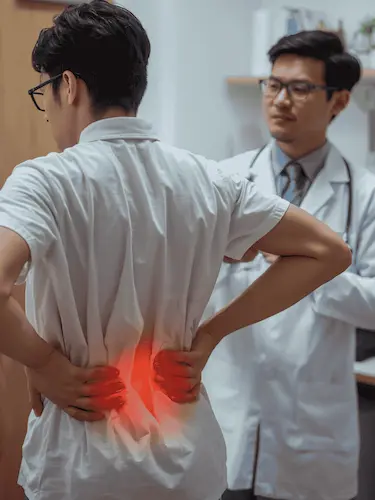
Back pain illustration

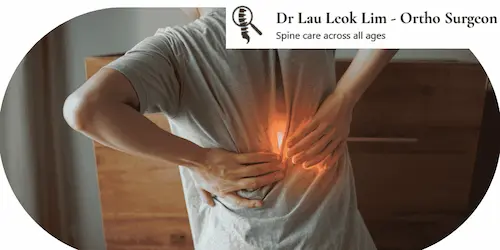
Many patients first experience back pain during periods of heavy activity, and they often assume it is just a muscle strain. Joe, a 35‑year‑old who had recently moved house, felt exactly that. After several days of lifting boxes and furniture, he noticed a persistent ache in his lower back. Over‑the‑counter painkillers helped a little, and he expected the discomfort to fade once the move was over.

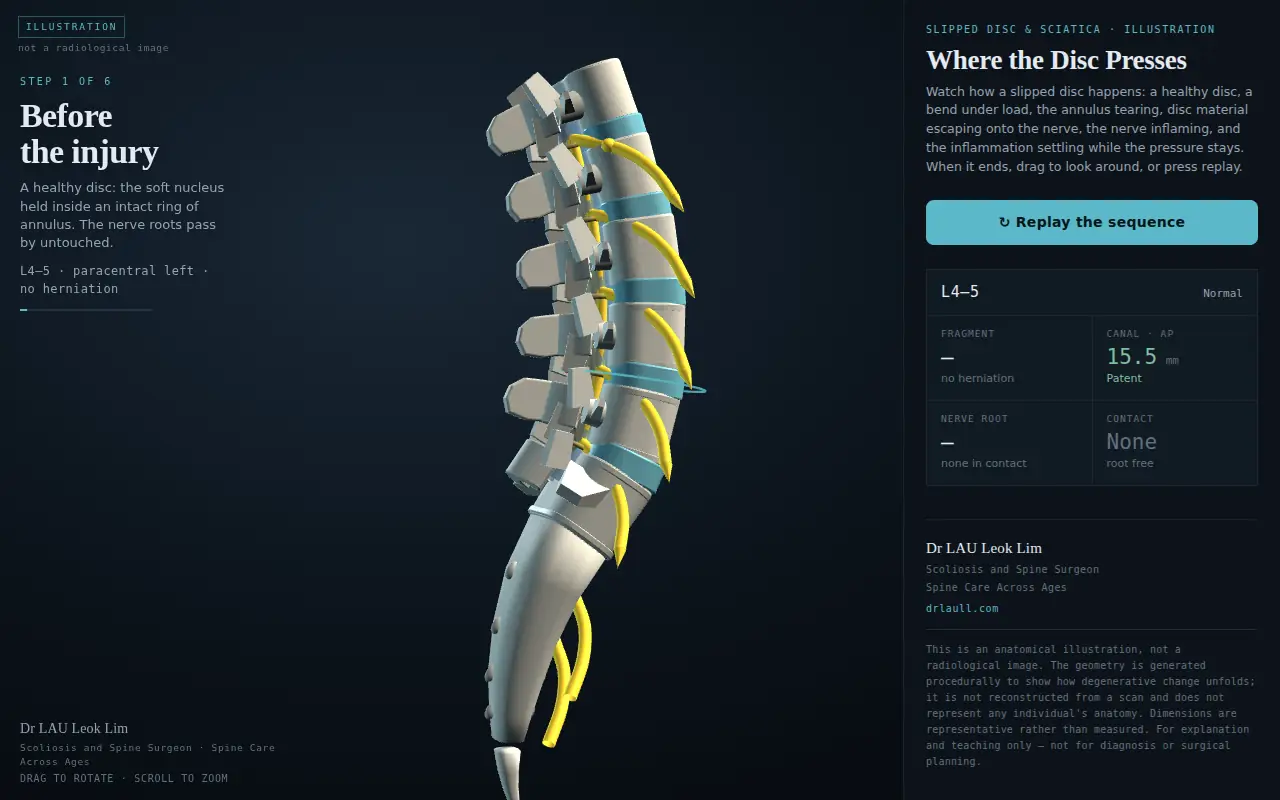
But a few days later, as he bent forward quickly to pick up a piece of clothing, a sudden, severe pain shot from his lower back into his right buttock and down his leg. The pain was so intense that he had to lie down immediately. Instead of easing, the radiating pain worsened, and his family called an ambulance. At the hospital, he was diagnosed with a prolapsed intervertebral disc—commonly known as a slipped disc—compressing the spinal nerves and causing sciatica.

Stories like Joe’s are common in Singapore. A slipped disc can occur after a single sudden movement or after weeks of accumulated strain. When the disc presses on the nerve roots, patients may experience back pain, buttock pain, leg pain, numbness, or weakness. Understanding how these symptoms develop and when to seek medical attention is essential for early recovery and long‑term spinal health.

The Scoliosis & Spine Clinic (SG) provides expert care for slipped disc and sciatica in Singapore—conditions that arise when lumbar disc herniation compresses spinal nerves. Patients often experience radiating leg pain, numbness, and difficulty walking. This article outlines how these conditions present, what causes them, and how they can be treated effectively in Singapore.
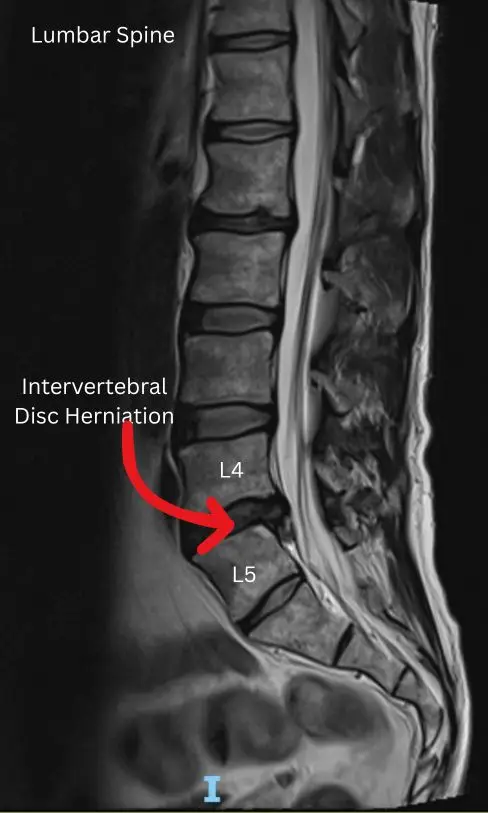
Lumbar disc herniation compressing spinal nerves
Lumbar disc herniation compressing spinal nerves and causing leg pain

What Are the Symptoms?

Joe’s experience reflects the typical progression of symptoms. What begins as a dull backache can evolve into sharp, shooting pain when the disc presses on the nerve roots. Patients often describe the pain as “electric,” “burning,” or “pulling,” especially when standing, coughing, or bending forward.

  • Lower back pain or stiffness
  • Radiating pain down the leg (sciatica)
  • Numbness or tingling in the foot or calf
  • Muscle weakness or foot drop
  • Difficulty standing, walking, or climbing stairs

In severe cases, patients may struggle to bear weight on the affected leg—just as Joe did when he could no longer stand without intense pain.

What Are the Risk Factors?

Joe’s situation highlights several common risk factors. Repetitive lifting, bending, and twisting place significant stress on the lumbar discs. When combined with fatigue, poor posture, or underlying disc degeneration, even a small movement can trigger a large herniation.

  • Age 30–60 (disc degeneration)
  • Repetitive bending, lifting, or twisting
  • Prolonged sitting or poor posture
  • Smoking and reduced disc hydration
  • Obesity and core muscle weakness
  • Previous spine injury or surgery

Many patients are surprised that the “final trigger” is often something trivial—like picking up a sock—because the disc was already weakened from earlier strain.

What Causes Slipped Disc and Sciatica?

In Joe’s case, days of heavy lifting likely caused micro‑tears in the outer disc ring. When he bent forward suddenly, the weakened disc ruptured, allowing the inner gel to protrude and compress the nerve root. This is the most common mechanism behind acute sciatica.

  • Herniated lumbar disc pressing on nerve roots
  • Trauma or lifting injury
  • Spinal instability or spondylolisthesis

Once the nerve is irritated, inflammation and swelling worsen the pain, which explains why symptoms often escalate rapidly within hours.

How Is It Diagnosed?

Joe’s diagnosis was made in the emergency department, but most patients are evaluated in a clinic setting. A careful clinical examination helps identify nerve tension, muscle weakness, and sensory changes. Imaging is used to confirm the diagnosis and guide treatment.

  • Clinical examination (e.g. straight leg raise test)
  • MRI of the lumbar spine to confirm disc herniation
  • CT scan for bony narrowing or foraminal stenosis

MRI remains the gold standard because it shows both the disc and the affected nerve root clearly.

What Are the Treatment Options?

Most patients, including those with severe initial pain like Joe, improve with structured non‑surgical care. The goal is to reduce inflammation, relieve nerve pressure, and restore mobility safely.

Non-Surgical Management

  • Activity modification and ergonomic correction
  • Physical therapy and core strengthening
  • Oral medications (NSAIDs, nerve modulators)
  • Epidural steroid injections for inflammation

Many patients recover within weeks to months with the right combination of rest, physiotherapy, and targeted medication.

Surgical Intervention

Surgery is considered when symptoms persist despite conservative treatment, or when there is significant weakness, severe nerve compression, or difficulty walking. In Joe’s case, early imaging allowed doctors to determine whether urgent surgery was needed.

  • Microdiscectomy (minimally invasive disc removal)
  • Lumbar decompression and fusion (for instability)
  • Endoscopic discectomy (select cases)

Modern minimally invasive techniques allow patients to return to normal activities much faster, with excellent long‑term outcomes.

Conclusion

Slipped disc and sciatica can significantly affect mobility, comfort, and quality of life. Joe’s experience shows how quickly symptoms can escalate—and how important early assessment is. At The Scoliosis & Spine Clinic (Sg), we offer comprehensive evaluation and tailored treatment plans—from conservative care to advanced surgical options. Early diagnosis and targeted therapy are key to long-term recovery and spinal health.

Frequently Asked Questions: Sciatica

What is sciatica?
Sciatica refers to pain caused by irritation or compression of the sciatic nerve—the largest nerve in the body—which runs from the lower back through the buttock and down the leg. When a lumbar disc herniates or when the spinal canal narrows, the nerve becomes inflamed, leading to radiating leg pain, numbness, or weakness.

Can scoliosis cause sciatica?
Yes. Scoliosis can shift the spine’s alignment and alter weight distribution, increasing pressure on the nerve roots. In adults, degenerative scoliosis or disc collapse on the concave side of the curve can lead to nerve compression and sciatica-like symptoms.

What are the red flags associated with sciatica?
Red flags suggest a more serious underlying condition and require urgent medical attention:

  • Sudden or severe weakness in the leg or foot
  • Loss of bladder or bowel control (possible cauda equina syndrome)
  • Progressive numbness or neurological deficits
  • Unrelenting pain that does not improve with rest or medication
  • History of cancer, unexplained weight loss, fever, or infection

If any of these symptoms occur, seek emergency care immediately.

What are the typical symptoms of sciatica?
Patients often describe sharp, burning, or electric pain radiating from the lower back into the buttock, thigh, or calf. Numbness, tingling, or muscle weakness may accompany the pain. Symptoms often worsen with sitting, bending forward, coughing, or twisting.

What is Cauda Equina Syndrome?
Cauda Equina Syndrome is a rare but serious condition caused by severe compression of the nerve bundle at the base of the spine. It can lead to permanent neurological damage if not treated promptly.

  • Sudden loss of bladder or bowel control
  • Severe or rapidly worsening leg weakness
  • Numbness in the saddle region (inner thighs, buttocks, genitals)
  • Sharp or shooting pain in both legs
  • Sexual dysfunction or loss of sensation

If you experience these symptoms, seek emergency medical attention immediately. Early surgical decompression is critical to prevent permanent deficits.

Who should I see for sciatica?
Persistent or worsening sciatica should be evaluated by an orthopaedic surgeon with a special interest in spine conditions or a spine surgeon (orthopaedic or neurosurgical). These specialists are trained to diagnose nerve compression, interpret MRI findings, and recommend appropriate treatment.

  • Expertise in spinal anatomy and nerve-related pain
  • Accurate interpretation of MRI and imaging studies
  • Access to minimally invasive and advanced surgical options
  • Collaboration with physiotherapists and pain specialists
  • Experience managing slipped discs, stenosis, and scoliosis-related nerve compression

Early evaluation helps prevent worsening symptoms and guides you toward effective treatment options.

What is the recovery period for successful non-operative treatment?
Most patients improve within 6 to 12 weeks with conservative care. Physiotherapy focuses on core strengthening, flexibility, posture correction, and nerve mobilisation. Medications and activity modification help reduce inflammation and allow the nerve to recover.

When is surgery recommended?
Surgery is considered when:

  • Symptoms persist beyond 6–12 weeks despite conservative treatment
  • There is significant or progressive weakness
  • Imaging confirms a surgically correctable disc herniation or stenosis

The most common procedure is a microdiscectomy, which removes the herniated disc fragment pressing on the nerve.

What is the recovery time after surgery?
Recovery varies by patient and procedure. Most individuals return to light activities within 4–6 weeks and resume full activity within 2–3 months. Minimally invasive techniques often result in less pain and faster recovery.

How much does sciatica surgery cost?
Costs vary depending on hospital class, complexity, and insurance coverage. In Singapore’s private sector, a lumbar discectomy typically ranges from SGD 20,000 to SGD 40,000. Public sector costs may be lower with subsidies. Always consult your provider for an accurate estimate based on your condition and insurance plan.

Can I return to sports after treatment?
Yes. With proper rehabilitation and medical clearance, most patients return to sports and physical activity. Targeted physiotherapy helps rebuild strength, improve flexibility, and reduce the risk of recurrence.

Does the clinic assist with insurance claims?
Yes. Our administrative team assists with insurance documentation and helps you navigate the claim process smoothly.

  • Support with insurance form completion
  • Provision of medical reports and itemised invoices
  • Coordination with major insurance providers
  • Guidance on pre-authorisation requirements
  • Assistance with Medisave and Integrated Shield Plans (where applicable)

We aim to make the process as seamless as possible so you can focus on recovery.

How does your clinic approach sciatica care?
We use a multidisciplinary approach that combines orthopaedic expertise, physiotherapy, ergonomic guidance, and personalised treatment planning. Whether non-operative or surgical, the goal is to relieve pain, restore function, and support long-term spine health.

📞 Need to speak with The Scoliosis & Spine Clinic?
Reach out to Dr Lau LL directly via email or WhatsApp for appointments, questions, or support.

© Dr Lau LL. All rights reserved.

This page is for educational purposes only and does not constitute medical advice. For personalized evaluation and treatment, please consult a qualified spine specialist.

Leave a Comment

Your email address will not be published. Required fields are marked *

Scroll to Top