Neck Pain: When Pain Spreads to Your Shoulder or Arm
Understanding Cervical Radiculopathy
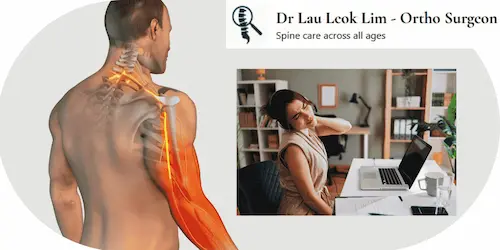
Amanda’s Story: When Neck Pain Becomes Something More
Amanda, a 42‑year‑old accountant in Singapore, spent most of her day seated at her desk, switching between her desktop monitor and a laptop during client meetings. Like many deskbound professionals, she often experienced tightness in her neck after long hours of screen work.
One particularly exhausting week, after several days of overtime, she fell asleep in an awkward position. The next morning, she woke with severe neck pain that shot into her right shoulder, arm, and forearm. This time, the pain did not improve with stretching or massage. She noticed her grip felt weaker and became concerned.
After a clinical evaluation and MRI, she was diagnosed with a slipped disc in the neck causing cervical radiculopathy — a condition where a compressed nerve root leads to radiating arm pain, numbness, or weakness.
Symptoms of Neck Pain and Cervical Radiculopathy
Many individuals seeking neck care in Singapore experience symptoms similar to Amanda’s, especially those with prolonged desk work or suboptimal ergonomics. This educational resource, authored by Dr Lau LL, provides evidence‑based information to help readers understand cervical radiculopathy and other causes of neck pain.
Common symptoms include:
- Sharp or burning neck pain
- Pain radiating into the shoulder, arm, or forearm
- Numbness or tingling in the fingers or forearm
- Muscle weakness or reduced grip strength
- Reduced reflexes in the upper limb
Risk Factors for Neck Pain
Several factors increase the likelihood of developing cervical radiculopathy:
- Age 40–60 (disc degeneration)
- Repetitive neck movements or poor ergonomics
- Forward head posture from prolonged screen use
- Smoking and reduced disc nutrition
- Heavy manual labour or vibration exposure
- Genetic predisposition
- Previous neck injury
Causes of Neck Pain and Nerve Compression
The most common causes of cervical radiculopathy include:
- Herniated cervical disc pressing on a nerve root
- Bone spurs (osteophytes) narrowing the nerve exit
- Trauma such as whiplash
- Tumours or infections (rare)
Cervical Radiculopathy vs Cervical Myelopathy
While cervical radiculopathy occurs when a single nerve root in the neck is compressed or irritated, cervical myelopathy is a more serious condition caused by compression of the spinal cord itself.
Key differences:
- Cervical radiculopathy affects one nerve root → symptoms in a specific arm or hand area (pain, numbness, tingling, weakness).
- Cervical myelopathy affects the spinal cord → symptoms in both hands, balance issues, gait difficulty, clumsiness, or coordination problems.
Although they are different conditions, they can sometimes occur together. For example, a large slipped disc or severe degeneration may compress both:
- the nerve root → causing arm symptoms (radiculopathy)
- the spinal cord → causing coordination or walking issues (myelopathy)
When both are present, patients may experience a combination of symptoms such as radiating arm pain and hand clumsiness or unsteady walking. Early evaluation is important because cervical myelopathy can be progressive if left untreated.
Conditions That Mimic Cervical Radiculopathy
Because arm pain and weakness can resemble other conditions, clinicians may also consider:
- Stroke or TIA – sudden weakness, facial droop, speech difficulty
- Rotator cuff tear or shoulder impingement – shoulder‑dominant pain
- Carpal tunnel syndrome – numbness in thumb, index, middle fingers
- Ulnar neuropathy – numbness in ring and little fingers
- Brachial plexus injury – widespread arm weakness after trauma
- Myofascial pain syndrome – muscle knots causing referred pain
Proper evaluation helps distinguish cervical radiculopathy from these conditions, especially when symptoms appear suddenly or involve weakness.
How Cervical Radiculopathy Is Diagnosed
Diagnosis typically includes:
- Physical examination (Spurling’s test, reflex checks, strength testing)
- MRI or CT scan to visualise nerve compression
- Electromyography (EMG) to assess nerve function
Treatment Options for Neck Pain
Non-Surgical Management
- Activity modification and posture correction
- Physical therapy (traction, strengthening, nerve glides)
- Medications (NSAIDs, muscle relaxants)
- Epidural steroid injections to reduce inflammation
Neck Flexibility Routine – Gentle Stretches for Mobility
Neck Strengthening – Safe Exercises for Stability & Support
Many patients improve significantly with a combination of posture correction, physiotherapy, and targeted strengthening.
Surgical Intervention
- Anterior Cervical Surgery (ACDF & Artificial Disc Replacement)
- Posterior cervical foraminotomy
Neck Care in Singapore: When to Seek Help
If you experience persistent neck pain, radiating arm symptoms, or weakness, early assessment is important. Timely evaluation helps prevent long‑term nerve irritation and supports recovery.
Conclusion
Cervical radiculopathy can significantly affect daily function and quality of life. Amanda’s experience highlights how symptoms can escalate quickly, especially in individuals with prolonged desk work or poor ergonomics.
For readers seeking reliable, evidence‑based information on spine health, this educational resource is authored by Dr Lau LL, an orthopaedic spine surgeon practising in Singapore.
Frequently Asked Questions
1. Should I sleep on my side or my back?
Both positions can be suitable depending on what reduces your symptoms. Sleeping on your back with a supportive neck pillow helps maintain alignment. If you sleep on your side, use a pillow that keeps your head level and avoid curling your neck forward.
2. How long will the symptoms take to resolve?
Most patients improve within 6 to 12 weeks with nonoperative care such as physiotherapy, medication, and rest. Recovery time varies depending on severity and individual response to treatment.
3. The symptoms are not improving with nonoperative treatment. What’s next?
If conservative treatment fails, further evaluation may be needed. This could include imaging (MRI), nerve studies, or a surgical consultation.
4. What are the risks of surgery making me worse?
Spine surgery is generally safe when performed by an experienced specialist. However, risks include infection, nerve irritation, persistent symptoms, or adjacent segment degeneration.
5. What is the downtime after surgery?
Most patients return to light activities within 2 to 4 weeks. Full recovery may take 6 to 12 weeks depending on the procedure and individual healing.