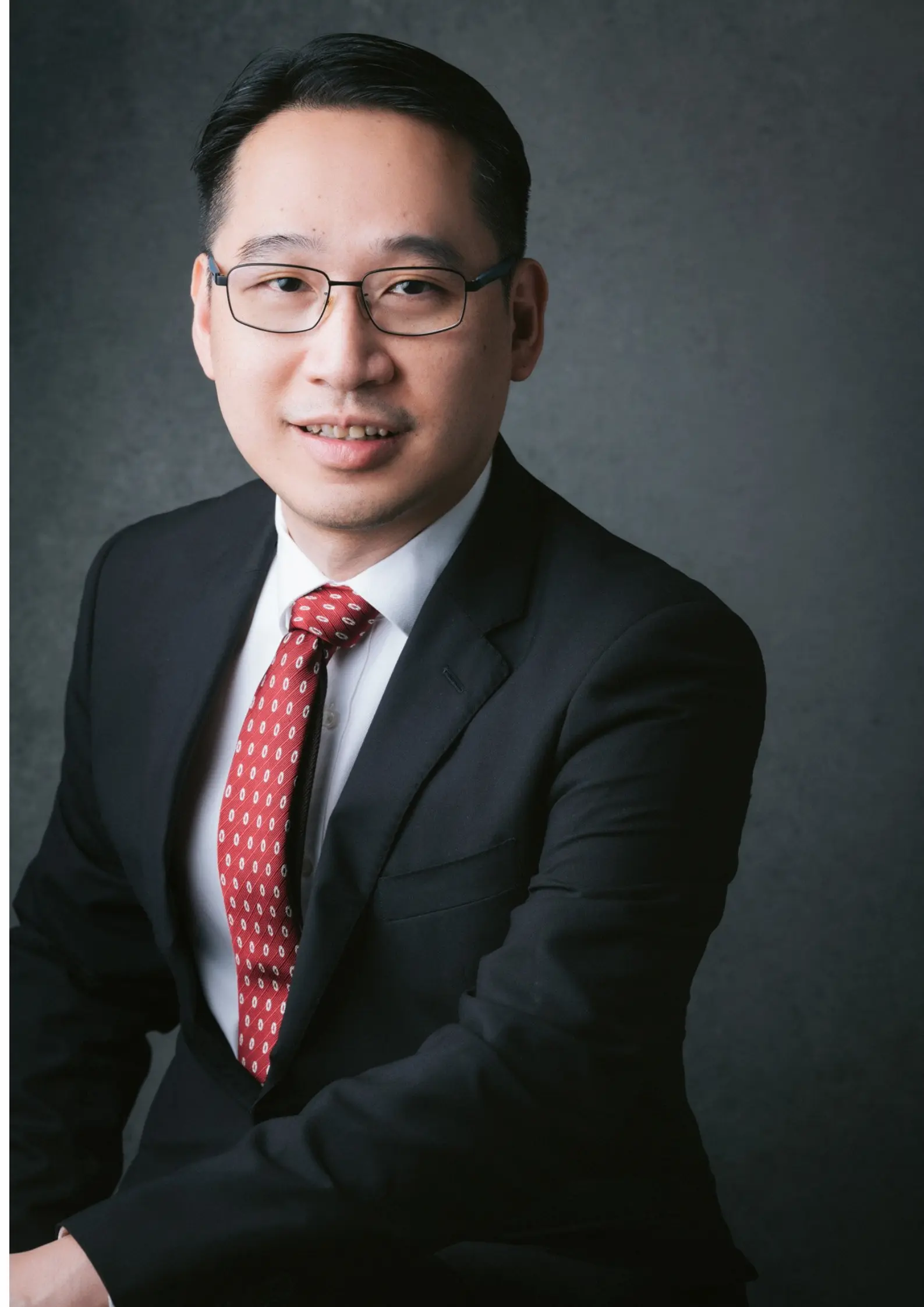
Dr LAU Leok Lim
Senior Consultant Orthopaedic Surgeon with a Special Interest in Spine Surgery Across All Ages
Patients and colleagues call me Dr Lau.
- MBBCh (Medicinae Baccalaureus, Baccalaureus Chirurgiae)
- BAO (Baccalaureus in Arte Obstetricia)
- BA (Artium Baccalaureus)
- Trinity College, University of Dublin (2002)
- USMLE Steps 1–3 Completed, ECFMG Certified
- MRCS (Edinburgh) — Member of the Royal College of Surgeons of Edinburgh
- MMed (Orthopaedic Surgery), National University of Singapore (NUS)
- FRCS (Orthopaedic Surgery) (Edinburgh) — Specialist in Orthopaedic Surgery
- Fully registered with the Ministry of Health (MOH), Singapore
- Specialist in Orthopaedic Surgery
- Registration No. 11302F
- Registered in June 2011
- Fellowship in Spine Surgery (Singapore)
-
Fellowship in Paediatric Spine Surgery
Thomas Jefferson University & Nemours Children's Hospital, USA
About Dr Lau
Dr Lau is a specialist in Orthopaedic Surgery subspecialising in Spine Surgery, with a special interest in Paediatric Spine. He has more than 20 years of experience in the medical field. The depth and breadth of his medical training, coupled with more than a decade of experience managing spinal conditions from infants to nonagenarians in a high-volume tertiary teaching hospital, have honed his surgical skills and sharpened his clinical acumen.
Guided by evidence-based medicine and adopting a consultative, patient-centred approach supported by a multidisciplinary team, he places his patients on the road to recovery holistically and expeditiously.
Dr Lau graduated from Trinity College Dublin, University of Dublin in 2002 with honours in anatomy and pharmacology. He completed both basic and advanced surgical training in Singapore. He obtained a Master of Medicine in Orthopaedic Surgery from the National University of Singapore (NUS) and subsequently became a Member and later a Fellow of the Royal College of Surgeons of Edinburgh in 2011.
Clinical Training & Spine Practice
Dr Lau embarked on subspeciality training in Spine Surgery at the National University Hospital (NUH), where he trained intensively for two years. After being appointed a full-fledged spine surgeon, he pursued further advanced clinical training in Paediatric Spine Surgery at an ACGME-accredited facility at Nemours/A.I. duPont Hospital for Children in the United States.
He is the first fully trained Spine Surgeon who is also fellowship-trained specifically in Paediatric Spine Surgery. Over the past decade, he has continued to practise in this highly specialised field, caring for children and adults with complex spinal conditions.
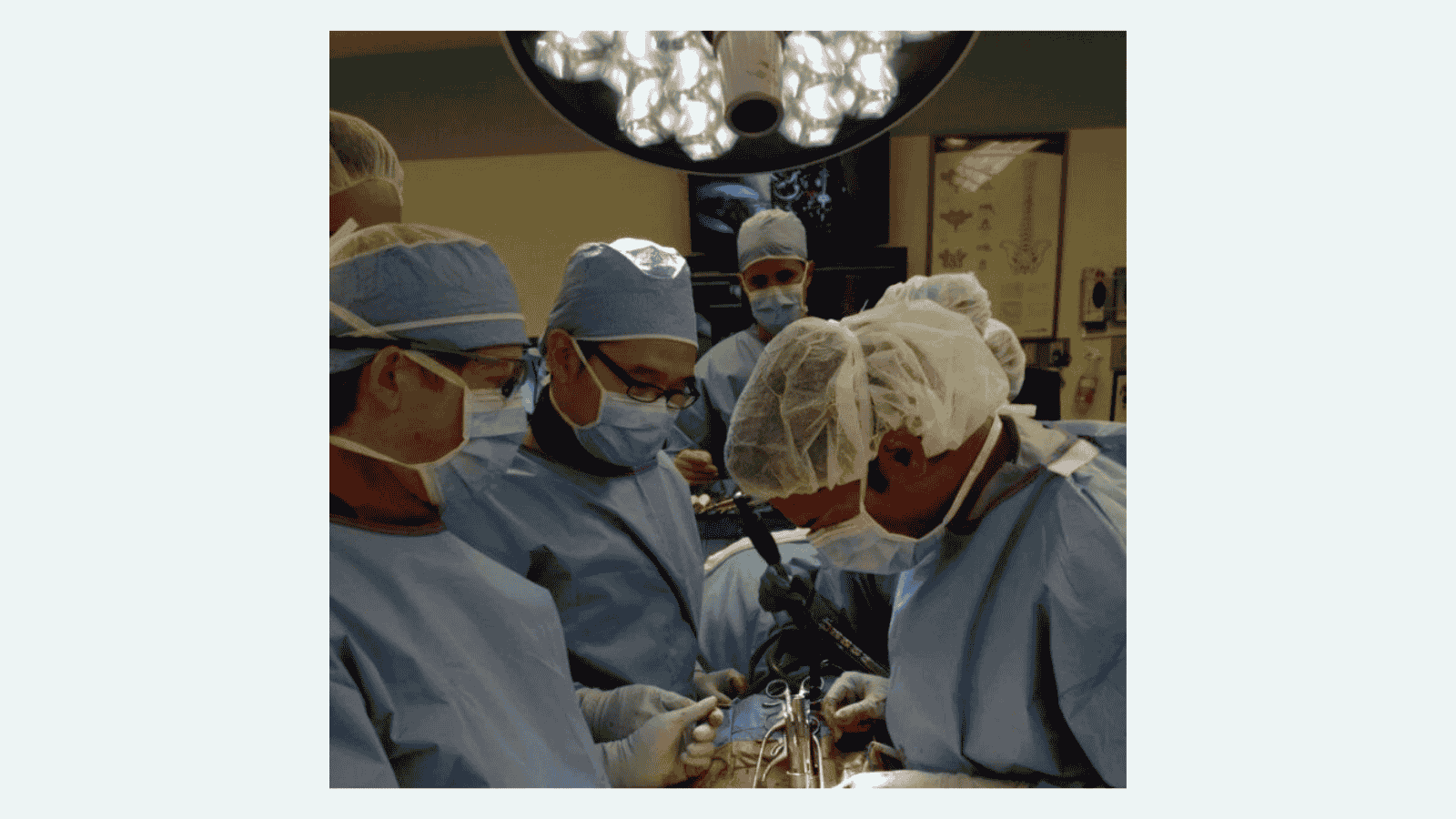
Prior to entering private practice, Dr Lau ran a busy tertiary spine service. He was one of the highest-volume surgeons in the institution, seeing more than 4,000 patient‑visits per year and performing hundreds of surgeries annually.
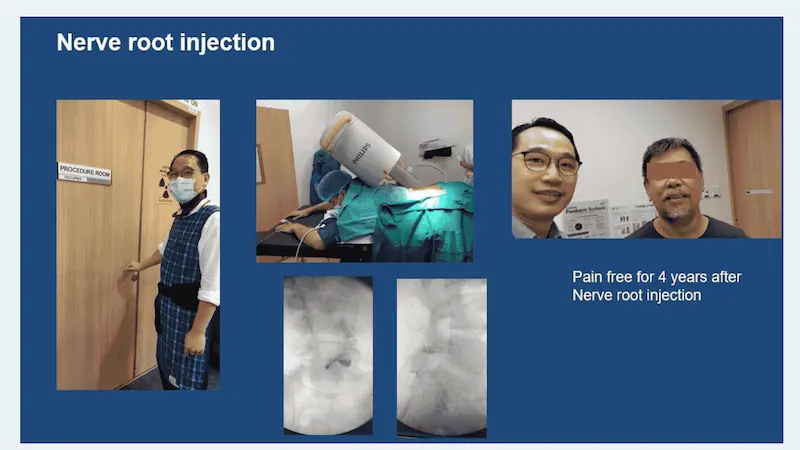
He also conducted regular same‑day spinal intervention services, such as nerve root blocks, to help patients achieve prompt relief and to accurately identify the source of their symptoms.
Patient Stories & Personal Reflections
Over the years, many of Dr Lau's patients have shared how much they benefitted from his personal touch and the time he invests in understanding their concerns. One particularly meaningful moment in his career was when he was invited to write the foreword for Embrace — a book authored by his patient, Elizabeth, who underwent scoliosis surgery under his care.
In her book, Elizabeth chronicles her scoliosis journey with honesty and courage, offering encouragement to others facing similar challenges. Dr Lau considers it a privilege to have been part of her recovery and to contribute to a guide that continues to inspire patients and families navigating scoliosis.

Academic Leadership, Research & National Impact
Dr Lau serves as an Assistant Professor at the NUS Yong Loo Lin School of Medicine and is actively involved in teaching and examining duties at both undergraduate and postgraduate levels. In the academic sphere, he has published more than 20 scientific papers and contributed 9 book chapters, with a primary focus on spinal deformity management, particularly Adolescent Idiopathic Scoliosis.
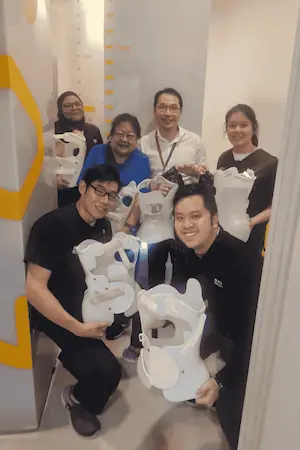
After securing a research grant exceeding SGD 2 million, he was appointed Project Director to optimise the National Scoliosis Screening Programme. Over a decade of coordinated, multi‑pronged efforts — including the adoption of smart brace technology and low‑dose EOS imaging — the programme achieved a significant reduction in surgical eligibility rates while maintaining a favourable cost‑benefit ratio.
In recognition of these outcomes, Dr Lau was invited to present the findings internationally, contributing to global discussions on modern scoliosis screening and early intervention strategies.
Dr Lau in Action
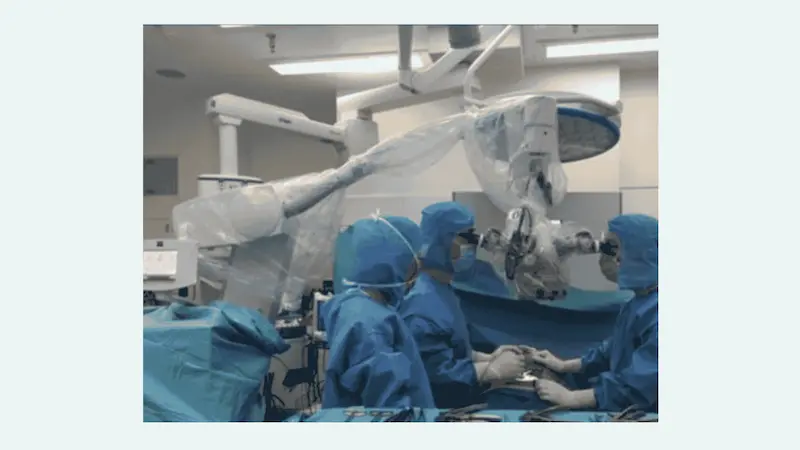
Media interviews and public features, collaborative exchanges with visiting surgeons, webinars for the surgical community, presentations at major international meetings, and selected notable cases from the operating theatre.
Awards & Grants
- Long Service Award – 2018 and 2024
- American Orthopaedic Association – ASEAN Orthopaedic Association Travelling Fellow 2012
- Public Healthcare Clinician Special Recognition Award – 2013
- Academic Medicine Developmental Award FY 2013/2014
- Japanese Pediatric Orthopaedic Association Travelling Fellowship – 2014
-
Health Service Development Grant (HSDP) – SGD 2.3 million (Approved October 2018)
"Adolescent Idiopathic Scoliosis Screening Programme in the 21st Century – The Triad of Smart Brace, EOS 2D/3D Low Dose Machine and National Scoliosis Database to Improve Clinical Effectiveness"
Professional Societies, Teaching & Surgical Education
Beyond academic work, Dr Lau is actively involved in several professional organisations, including the Singapore Orthopaedic Association, Asia Pacific Spine Society, and the North American Spine Society. He previously served as Treasurer and Executive Committee member of the Singapore Spine Society, contributing to national-level spine education and professional development.
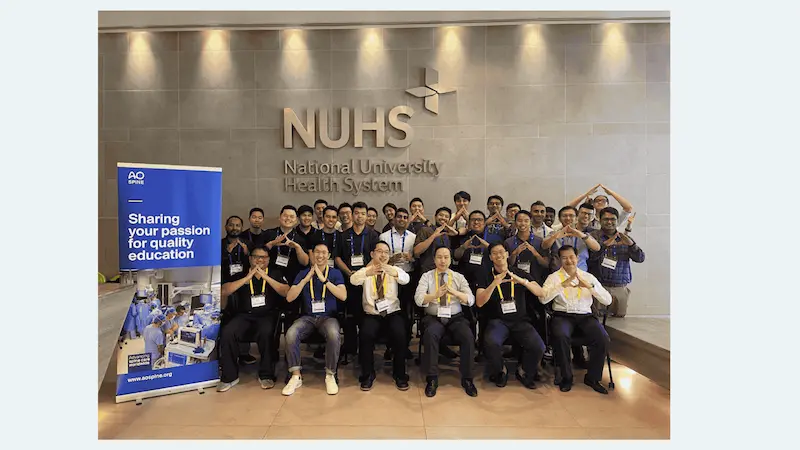
As a country delegate and national faculty of AO Spine, he has chaired and lectured in numerous structured courses designed to train budding and early‑career spine surgeons across Singapore and the Asia‑Pacific region. His commitment to mentorship and surgical education has helped shape the next generation of spine specialists.
Surgical Expertise, Techniques & Advanced Technologies
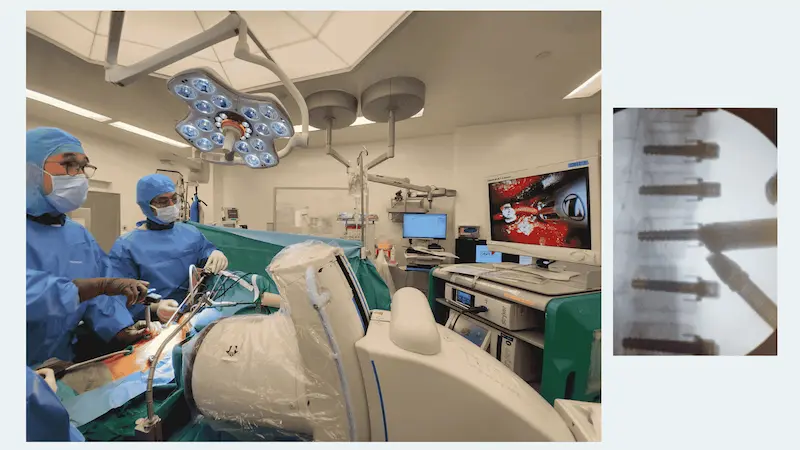
Dr Lau manages the full spectrum of spinal conditions and is proficient in a wide range of surgical techniques for adult spinal pathologies, including minimally invasive surgery (MIS), robotic‑guided procedures, and motion‑preservation strategies.
In paediatric spine surgery, he is recognised for his expertise in growth‑sparing techniques such as vertebral body tethering (VBT), endoscopic deformity correction, and complex large‑curve correction. These approaches aim to preserve mobility while correcting spinal alignment.
He also incorporates advanced technologies such as 3D printing, smart braces, and modern imaging systems to personalise treatment and optimise outcomes for his patients.
Comprehensive Spine Care Across All Ages
Dr Lau treats a comprehensive range of adult and paediatric spinal conditions, including back and neck pain, prolapsed intervertebral discs, spondylolysis and spondylolisthesis, degenerative disc disease, spinal stenosis, myelopathy, spinal tumours, inflammatory and traumatic spinal disorders, scoliosis, kyphosis, and complex deformities.
His expertise extends to spinal conditions associated with skeletal dysplasia, neuromuscular disorders, growth and endocrine abnormalities, and rare genetic or syndromic pathologies. In managing these complex cases, he works closely with a multidisciplinary team — including geneticists, endocrinologists, neurologists, and specialised paediatric services — to ensure holistic, precise, and personalised care for each patient.
Across every stage of life and every level of complexity, Dr Lau's philosophy remains constant — to provide thoughtful, evidence‑based, and compassionate spine care that restores function, preserves mobility, and supports patients in returning to the lives they value.
Peer‑Reviewed Publications
- Chua YX, Yang C, Lau LL, Loh SEK. Advantages of a transradial vascular access for embolization of a sacral tumor in a child. The Journal of Vascular Access 2019;20:450-1. PMID: 30608009
- Hey HW, Ng LW, Tan CS, et al. Spinal Implants Can Be Inserted in Patients With Deep Spine Infection: Results From a Large Cohort Study. Spine 2017;42:E490-5. PMID: 27333342
- Hallinan JTPD, Wu J, Liu C, et al. Exploring the Potential of a Deep Learning Model for Early CT Detection of High-Grade Metastatic Epidural Spinal Cord Compression and Its Impact on Treatment Delays. Cancers 2025;17:2180. PMID: 40647478
- Hasan MY, Kumar KK, Lwin S, Lau LL, Kumar N. Cervical intradural abscess masquerading as an epidural collection. Global Spine Journal 2013;3:249-52. PMID: 24436877
- Hey HW, Wong CG, Lau ET, et al. Differences in erect sitting and natural sitting spinal alignment — insights into a new paradigm and implications in deformity correction. The Spine Journal 2017;17:183-9. PMID: 27562103
- Hey HWD, Lau ET, Tan KA, et al. Lumbar Spine Alignment in Six Common Postures: An ROM Analysis With Implications for Deformity Correction. Spine 2017;42:1447-55. PMID: 28240654
- Hey HWD, Luo N, Chin SY, et al. The Predictive Value of Preoperative Health-Related Quality-of-Life Scores on Postoperative Patient-Reported Outcome Scores in Lumbar Spine Surgery. Global Spine Journal 2018;8:156-63. PMID: 29662746
- Hey HWD, Tan KA, Neo CS, et al. T9 versus T10 as the upper instrumented vertebra for correction of adult deformity — rationale and recommendations. The Spine Journal 2017;17:615-21. PMID: 27856380
- Hey HWD, Tan KLM, Moorthy V, et al. Normal variation in sagittal spinal alignment parameters in adult patients: an EOS study using serial imaging. European Spine Journal 2018;27:578-84. PMID: 29332238
- Hey HWD, Teo AQA, Tan KA, et al. How the spine differs in standing and in sitting — important considerations for correction of spinal deformity. The Spine Journal 2017;17:799-806. PMID: 27063999
- Hey HWD, Thiam DW, Koh ZSD, et al. Is Intraoperative Local Vancomycin Powder the Answer to Surgical Site Infections in Spine Surgery? Spine 2017;42:267-74. PMID: 28207669
- Hey HWD, Wong GC, Chan CX, et al. Reproducibility of sagittal radiographic parameters in adolescent idiopathic scoliosis — a guide to reference values using serial imaging. The Spine Journal 2017;17:830-6. PMID: 28065817
- Kumar N, Vellayappan G, Ravikumar N, et al. Intraoperative Neuromonitoring (IONM): Is There a Role in Metastatic Spine Tumor Surgery? Spine 2019;44:E219-24. PMID: 30044368
- Kumar N, Tan B, Zaw AS, et al. The role of preoperative vascular embolization in surgery for metastatic spinal tumours. European Spine Journal 2016;25:3962-70. PMID: 26968873
- Lau LL, Mahadev A, Hui JH. Common lower limb sport-related overuse injuries in young athletes. Annals of the Academy of Medicine, Singapore 2008;37:315-9. PMID: 18461216
- Lim JL, Hey HWD, Kumar N, et al. A 10-Year Radiographic Study Comparing Anterior Versus Posterior Instrumented Spinal Fusion in Patients With Lenke Type 5 Adolescent Idiopathic Scoliosis. Spine 2020;45:612-20. PMID: 31770332
- Lin S, Hey HWD, Lau ETC, et al. Prevalence and Predictors of Pressure Injuries From Spine Surgery in the Prone Position: Do Body Morphological Changes During Deformity Correction Increase the Risks? Spine 2017;42:1730-6. PMID: 28368987
- Liu G, Tan JH, Fung G, et al. A Risk Quantification Reference Table for Progressed Adolescent Idiopathic Scoliosis Surgery: An Exact Case Matched Outcomes Analysis. Global Spine Journal 2023;13:2228-38. PMID: 35259977
- Low XZ, Furqan MS, Makmur A, et al. Automated Cobb angle measurement in scoliosis radiographs: A deep learning approach for screening. Annals of the Academy of Medicine, Singapore 2024;53:635-7. PMID: 39508697
- Ramos MRD, Liu G, Tan JH, et al. Risk factors for surgical complications in the management of ossification of the posterior longitudinal ligament. The Spine Journal 2021;21:1176-84. PMID: 33775844
- Ruiz JNM, Kandwal P, Lau LL, Liu GKP, Thambiah J, Wong HK. Selective Thoracic Fusion for Idiopathic Scoliosis: A Comparison of Three Surgical Techniques with Minimum 5-year Follow-up. Spine 2022;47:E272-82. PMID: 34610610
- Tan JH, Hey HWD, Wong G, Wong HK, Lau LL. Lumbar Adding-on of the Thoracic Spine After Selective Fusion in Adolescent Idiopathic Scoliosis Lenke Types 1 and 2 Patients: A Critical Appraisal. Spine 2021;46:E167-73. PMID: 33181768
- Tan JHJ, Hallinan JTPD, Lee R, et al. Trends in surgical management of spinal metastases in a Singaporean tertiary referral center: a 17-year retrospective review. Frontiers in Oncology 2023;13:1297553. PMID: 38074672
Book Chapters
- Lau LL, Shah SA. Chapter 11: Surgical Technique: Spondylolysis Repair. In: Spondylolisthesis: Diagnosis, Non-Surgical Management, and Surgical Techniques. Wollowick A, Sarwahi V (eds). Springer. DOI: 10.1007/978-1-4899-7575-1_11
- Grant D, Lau LL, Shah SA. Posterior Osteotomies of the Spine. In: Operative Techniques in Spinal Surgery. Rhee J, Wisel S (eds). Lippincott Williams & Wilkins.
- Shah SA, Lau LL. Treatment of Spinal Deformity in Cerebral Palsy. In: The Growing Spine. Akbarnia BA, Yazici M, Thompson GH (eds). Springer. DOI: 10.1007/978-3-662-48284-1_12
- Lau LL, MacKenzie W. Spinal Manifestations of Skeletal Dysplasias. In: The Growing Spine. Akbarnia BA, Yazici M, Thompson GH (eds). Springer. DOI: 10.1007/978-3-662-48284-1_20
- Lau LL, Shah SA. Posterior Occiput-C2 and C1-C2 Cervical Fusion. In: Master Techniques in Orthopaedic Surgery: Pediatrics. Skaggs DL, Kocher MS (eds). Lippincott Williams & Wilkins.
- Lau LL, Wong HK. Thoracoscopic Approaches in Deformities Correction. In: Endoscopic Spine Surgery, 2nd ed. Kim HD, Choi G, Lee SH, Fessler R (eds). Thieme.
- Lau LL, Helenius I, Mackenzie WG. Spinal Manifestation of Skeletal Dysplasias. In: The Growing Spine: Management of Spinal Disorders in Young Children, 3rd ed. Akbarnia BA, Thompson GH, Yazici M, El-Hawary R (eds). Springer. DOI: 10.1007/978-3-030-84393-9_22
- Lau LL. Chapter 6: Radiation Hazards in Adolescent Idiopathic Scoliosis Management. In: Insights and Innovations from AO Spine Asia Pacific — Adolescent Idiopathic Scoliosis. Thieme.
- Lau LL, Wong HK. Chapter 18: The Role of Anterior Surgery in Adolescent Idiopathic Scoliosis. In: Insights and Innovations from AO Spine Asia Pacific — Adolescent Idiopathic Scoliosis. Thieme.
I see patients across all ages — from a child flagged at school screening to an adult whose back pain has started limiting what they do. My aim is an accurate diagnosis first, and the least intervention that achieves a durable result.
Dr LAU Leok Lim
Orthopaedic Surgeon (Spine Surgery) · MOH Reg. 11302F