Back pain is very common in older adults. Many episodes are due to muscle strain or wear‑and‑tear changes in the spine. However, in the elderly—especially those with osteoporosis—sudden severe back pain after a minor fall may signal an osteoporotic spine fracture, a condition that can threaten mobility, confidence, and cherished travel plans.
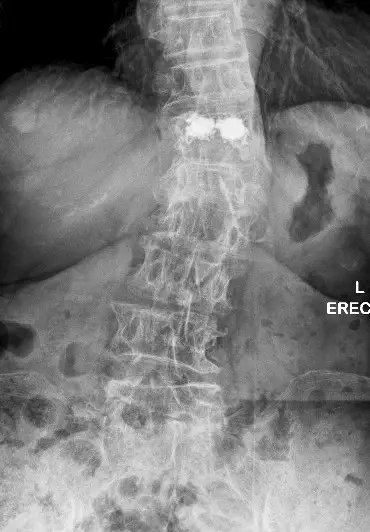
Imaging after vertebroplasty shows a stabilised T12 osteoporotic fracture, with underlying scoliosis also visible.
Common causes of back pain in the elderly
In older adults, back pain can arise from several overlapping conditions. Some are mild and self‑limiting, while others require urgent attention.
- Muscle strain and ligament sprain
- Degenerative disc disease
- Facet joint arthritis
- Spinal stenosis
- Degenerative scoliosis
- Osteoporotic vertebral fracture
- Less common but serious causes
Among these, osteoporotic vertebral fractures are frequently under‑recognised.
When back pain may be an osteoporotic spine fracture
Red flags in elderly back pain
- Sudden onset severe pain after a minor fall or simple bending.
- Sharp, localised pain in the mid or lower back.
- Difficulty turning in bed or rising from a chair.
- Visible stooping or loss of height.
- Known osteoporosis or previous fragility fractures.
If these features are present, early medical assessment is important. For enquiries, visit the contact page.
What is vertebroplasty?
Vertebroplasty is a minimally invasive procedure used to stabilise painful osteoporotic spine fractures.
- Stabilises the fracture
- Provides rapid pain relief in selected patients
- Improves mobility and supports earlier return to daily activities
Case story: From cancelled holiday to Antarctica
Her fall, diagnosis, and pain
She was an active 80‑year‑old grandmother who loved travelling with her family. One morning, she tripped and fell on her buttock while avoiding a crowd.
X‑rays and MRI revealed a T12 burst fracture.
Vertebroplasty and pain relief
Her pain eased slightly when lying still, but every movement triggered sharp pain. A family holiday seemed impossible.
After discussing options, she chose vertebroplasty. Bone cement was injected under imaging guidance.
Back to living: Antarctica with her family

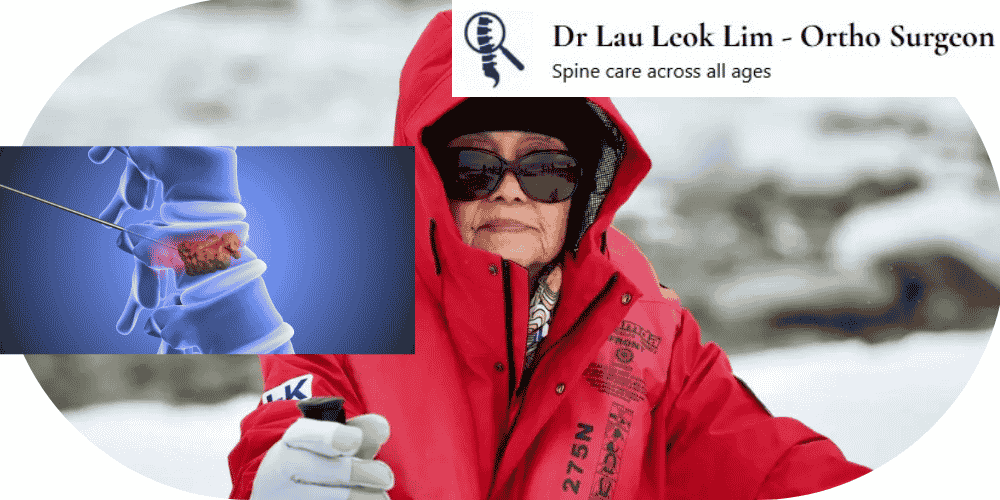
Two months after vertebroplasty, she travelled to Antarctica with her family.
Key takeaways for elderly patients and families
- Do not ignore sudden severe back pain after a fall.
- Seek early assessment to rule out fractures.
- Timely diagnosis guides appropriate treatment.
- Osteoporosis management reduces future fracture risk.
- Procedures such as vertebroplasty may help selected patients.
Conclusion
Back pain in the elderly should never be dismissed as "just old age." Osteoporotic spine fractures are common but treatable.
Learn more on the Geriatric Spine Conditions page .