Scoliosis Treatment in Singapore
Specialist scoliosis care by Dr LAU Leok Lim at Gleneagles Hospital, offering accurate diagnosis and personalised treatment for adolescents and adults with spinal curvature.
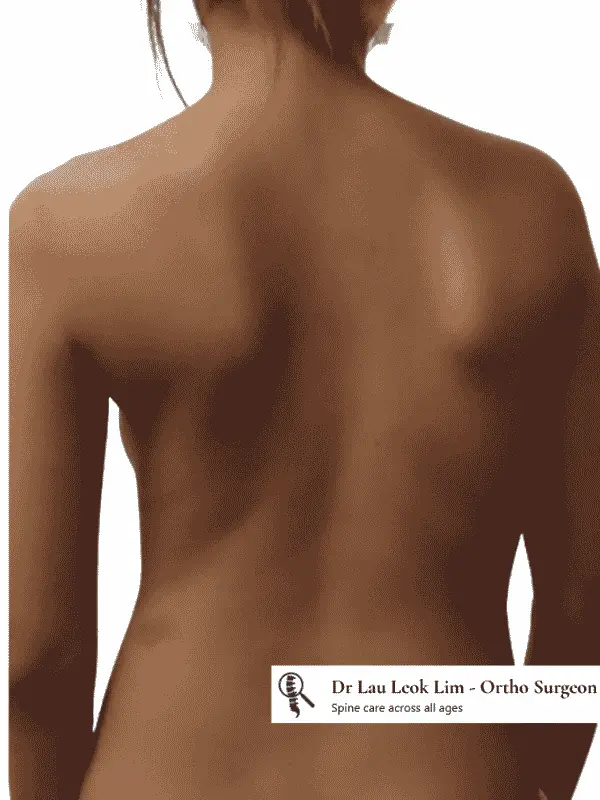
Understanding Scoliosis
Scoliosis refers to an abnormal sideways curvature of the spine. It can occur in children, adolescents, or adults, and may progress over time if not monitored. Early assessment helps determine whether observation, bracing, physiotherapy, or surgery is appropriate.
Scoliosis information cluster
Detailed guides on specific aspects of scoliosis care.
- Adolescent Idiopathic Scoliosis (AIS)The commonest form of scoliosis in teenagers.
- What Does Scoliosis Look Like?A 3D visual guide to the signs, the forward bend test and the Cobb angle.
- Cost of Scoliosis Surgery in SingaporeWhat influences the cost, and how insurance and Medisave apply.
- Vertebral Body Tethering (VBT)Keyhole, non-fusion surgery for growing teens with 35° to 70° curves.
- AIS & Competitive Sports After SurgeryReturning to sport and training after scoliosis surgery.
- EMBRACE – Patient GuidebookA guidebook for teenagers and families facing scoliosis.
- Tips for Living With ScoliosisPractical day-to-day advice for living with a spinal curve.
Common Symptoms
- Uneven shoulders or hips
- Visible spine curvature
- Rib prominence on one side
- Back pain or fatigue
- Clothes fitting unevenly
- In severe cases, breathing restriction
Not sure what these look like? The visual guide for parents and patients shows each sign on a rotating 3D spine and walks through the forward bend test.
Types of Scoliosis
Scoliosis is not a single condition. The type determines how a curve is likely to behave over time and how it is best managed.
Adolescent Idiopathic Scoliosis (AIS)
The most common form, usually identified during the growth spurt between ages 10 and 18. “Idiopathic” means no single underlying cause is found. Curves may progress while a child is still growing, and often stabilise once skeletal maturity is reached.
Read the full guide to scoliosis in adolescents →
Congenital Scoliosis
Caused by vertebrae that did not form or separate normally before birth. Because the abnormality is present from birth, a curve may be noticed in infancy or early childhood and can progress as the child grows.
Neuromuscular Scoliosis
Associated with conditions such as cerebral palsy or muscular dystrophy, where the muscles supporting the spine are weakened or work asymmetrically. Treatment planning takes the underlying condition into account alongside the curve itself.
Syndromic Scoliosis
Occurs as part of broader genetic or connective tissue syndromes, such as Marfan syndrome or neurofibromatosis. Curve behaviour depends on the underlying syndrome, and care is often shared with the other specialists involved.
Tumour‑related Scoliosis
The rarest form. Caused by spinal or paraspinal tumours that alter spinal alignment or stability.
Degenerative (Adult) Scoliosis
Age-related disc and joint changes can lead to spinal curvature developing in adulthood. Unlike adolescent scoliosis, where the curve itself is usually the main concern, adults more often present with back pain and stiffness.
Adults who had scoliosis as a teenager may also find the curve progresses later in life, with pain and stiffness becoming the more dominant features.
How Scoliosis Is Diagnosed
Assessment begins with a physical examination. The Adams’ Forward Bend Test is widely used to identify early signs, looking for asymmetry of the rib cage or lower back. Common signs include uneven shoulders or hips, a rib prominence on one side, and waistline asymmetry.
If scoliosis is suspected, a standing X-ray is performed to measure the curve. A Cobb angle above 10° confirms the diagnosis. Additional assessment includes skeletal maturity grading (Risser sign), curve pattern evaluation, and estimation of remaining growth potential — all of which help determine whether monitoring, bracing or surgery is appropriate.
When to Seek Assessment
- A visible curve, or shoulders, hips or waistline that look uneven
- A rib prominence that becomes obvious on bending forward
- A curve that appears to be changing during a growth spurt
- Back pain that is persistent or limits activity
- In adults: worsening back pain, stiffness, or a noticeable change in posture
Treatment Options
Treatment depends on age, curve severity, progression risk, and symptoms.
Non-surgical Options
- Observation and regular monitoring — review with repeat imaging at intervals, so that progression is detected early enough to act
- Physiotherapy and scoliosis-specific exercises
- Bracing (for selected adolescent cases)
- Pain management for adults
Surgical Options
Surgery is considered when curves are severe, progressive, or symptomatic. The decision depends on the size of the curve and how much growth remains.
In a child who is still growing, a curve beyond about 35–40° may be suitable for vertebral body tethering, a growth-modulating procedure that preserves spinal motion. Spinal fusion is generally considered for curves of more than 45°, and in selected situations — particularly lumbar curves or where there is significant truncal shift — for curves of 40–45°.
- Motion‑preserving options:
- Vertebral Body Tethering (VBT)
- ApiFix
- Endoscopic scoliosis surgery (keyhole)
- Traditional open method
- Complex deformity correction for curves beyond 90°
Learn more about surgical solutions.
Cost of Scoliosis Treatment in Singapore
Costs vary depending on imaging, bracing needs, and whether surgery is required.
Factors that may influence cost include:
- Need for X-ray or MRI
- Bracing vs physiotherapy vs surgery
- Day surgery vs inpatient stay
- Insurance coverage and Medisave eligibility
Consultation fees and treatment plans are discussed transparently during your visit. Our clinic team can guide you through estimated costs and insurance claims.
Learn more about the cost of scoliosis surgery.
What to Expect During Your Consultation
- Detailed history and physical examination
- Standing X-rays to assess curve severity
- Determination of the type of scoliosis
- Assessment of the risk of curve progression
- Explanation of findings and personalised treatment plan
Why Patients Choose Dr LAU Leok Lim
- Treatment across all ages — children, adolescents, adults, and older adults
- Experienced in managing a wide range of scoliosis curve types
- Manages the full spectrum of curves, from mild to the most severe deformities
- Experienced in the full range of treatment modalities — physiotherapy, bracing, growth‑friendly options such as vertebral body tethering (VBT), minimally invasive techniques, traditional open methods, and complex deformity correction
- Orthopaedic Surgeon (Spine Surgery) at Gleneagles Hospital
- Evidence‑based, patient‑centred care with clear explanation of treatment options
- Same-day appointments available
Learn more about Dr Lau → Meet Dr Lau
Related Spine Conditions
Frequently Asked Questions
Is scoliosis always serious?
Not always. Many curves are mild and only require monitoring. Progressive or symptomatic curves should be assessed.
Do I need an X-ray?
A standing X-ray is the most accurate way to measure curve severity and progression. A Cobb angle above 10° confirms the diagnosis.
Will I need surgery?
Surgery is considered only when curves are severe, progressive, or causing significant symptoms. In a child who is still growing, a curve beyond about 35–40° may be suitable for vertebral body tethering. Spinal fusion is generally considered for curves of more than 45°, and in selected situations — particularly lumbar curves or where there is significant truncal shift — for curves of 40–45°.
Can adults develop scoliosis?
Yes. Degenerative scoliosis can occur due to age-related disc and joint changes. Many under-treated adolescent scoliosis cases may also progress into adulthood, where pain and stiffness become more dominant features.
Does scoliosis always get worse?
Not necessarily. Many mild curves remain stable, particularly once growth is complete. The risk of progression is highest during the adolescent growth spurt.
Can physiotherapy correct a curve?
Physiotherapy and scoliosis-specific exercises can help with strength, posture awareness and comfort, and form part of management for many patients. They do not replace monitoring or bracing where those are indicated.
What surgical options are available in Singapore?
These include motion-preserving options such as vertebral body tethering and ApiFix, endoscopic (keyhole) scoliosis surgery, traditional open methods, and complex deformity correction. Learn more about surgical solutions.
What does scoliosis treatment cost?
Cost depends on whether imaging, bracing or surgery is required, and on insurance and Medisave eligibility. See our guide to the cost of scoliosis surgery in Singapore.