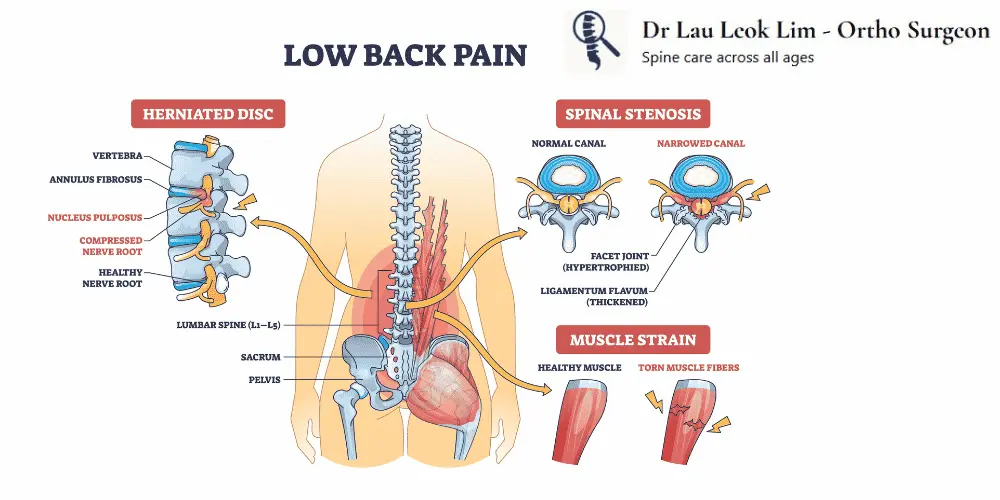
The three most common causes of low back pain.
In this guide, Dr LAU Leok Lim, Consultant Orthopaedic Surgeon (Spine Surgery) at Gleneagles Hospital, explains the top causes of back pain and shares practical strategies to prevent it — so you can stay active, aligned, and pain‑free.
1. Herniated Disc (Slipped Disc)
What causes it: The soft inner disc material pushes out through a weakened outer layer, irritating nearby nerves.
Who’s at risk: Adults aged 25–55, those with repetitive bending, heavy lifting, or prolonged sitting.
Symptoms: Back pain, leg pain, numbness, tingling, or sciatica.
Learn more: See the full guide on Slipped Disc & Sciatica.
2. Spinal Stenosis
What causes it: Narrowing of the spinal canal due to age‑related degeneration, disc collapse, or bone overgrowth.
Who’s at risk: Adults above 50, those with degenerative disc disease, or long‑standing back issues.
Symptoms: Back pain, leg heaviness, walking difficulty, relief when bending forward.
Related condition: Degenerative Disc Disease
3. Muscle Strain or Sprain
What causes it: Overstretching or tearing of muscles or ligaments due to sudden movement, poor posture, or overuse.
Who’s at risk: Athletes, weekend warriors, manual workers, and anyone with repetitive physical activity.
Symptoms: Localised back pain, stiffness, and pain with movement.
Prevention tips: Warm up properly, strengthen core muscles, avoid burst activities, and allow recovery time.
Conclusion: Your Spine, Your Strength
Understanding the causes of back pain empowers you to protect your spine. Stay active, move mindfully, and give your body the care it deserves.
Frequently Asked Questions (FAQ)
What is the most common cause of back pain?
The most common causes include herniated discs, spinal stenosis, and muscle strain. These conditions can irritate nerves or overload spinal structures.
When should I see a doctor for back pain?
Seek medical attention if back pain lasts more than a few weeks, causes leg symptoms, affects walking, or follows an injury.
Can back pain be prevented?
Yes. Prevention includes posture correction, regular exercise, core strengthening, proper lifting techniques, and avoiding prolonged sitting.
Is back pain always due to a slipped disc?
No. Many cases are due to muscle strain, ligament sprain, or age‑related degeneration rather than disc herniation.